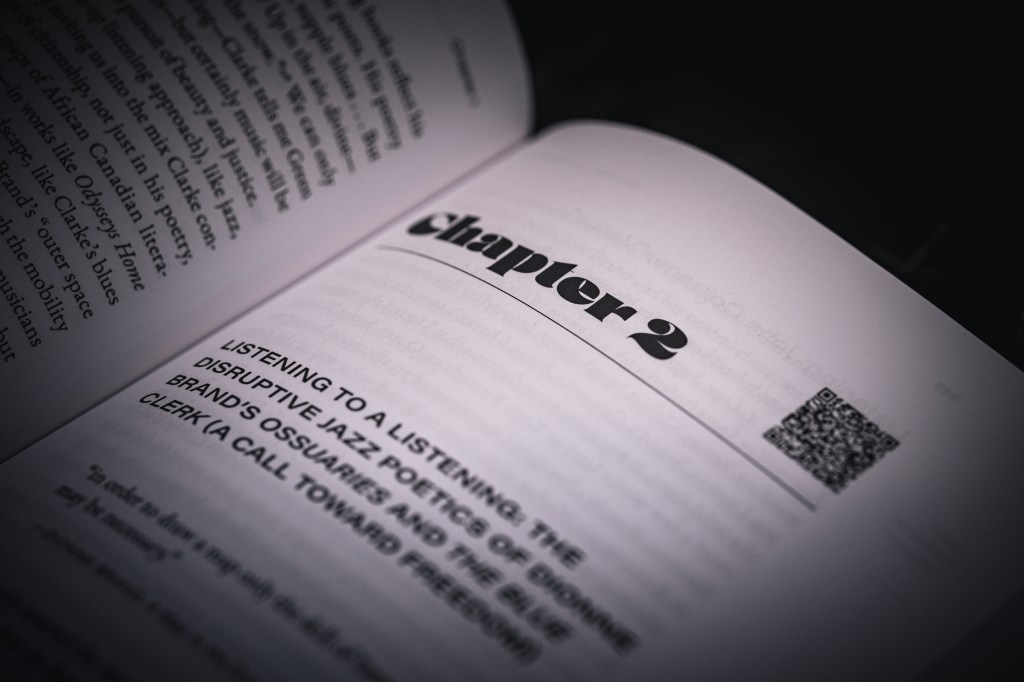
Supplemental Links
Part I
The Canadian Encyclopedia: The Original Creole Orchestra (Encyclopedia)
Rockhead’s Paradise (Wikipedia)
Brooks “The Mother” (Poem)
Barnard Center for Research on Women “Dionne Brand: Writing Against Tyranny and Toward Liberation” (Lecture)
Graham Foundation “Dionne Brand: The Shape of Language” (Lecture)
Part II
Jacob Lawrence’s Art (Archive)
Cubism (Archive)
Saarjie Baartman (Wikipedia)
Part III
World Trade Center 9/11 Collapse, “The grey blood of television.” – Brand (Video Clip – Trigger Warning)
Additional Sources
Dionne Brand: Writing Against Tyranny and Toward Liberation (Talk)
Dionne Brand: “prologue for Gaza” (poem)
Discussion Questions
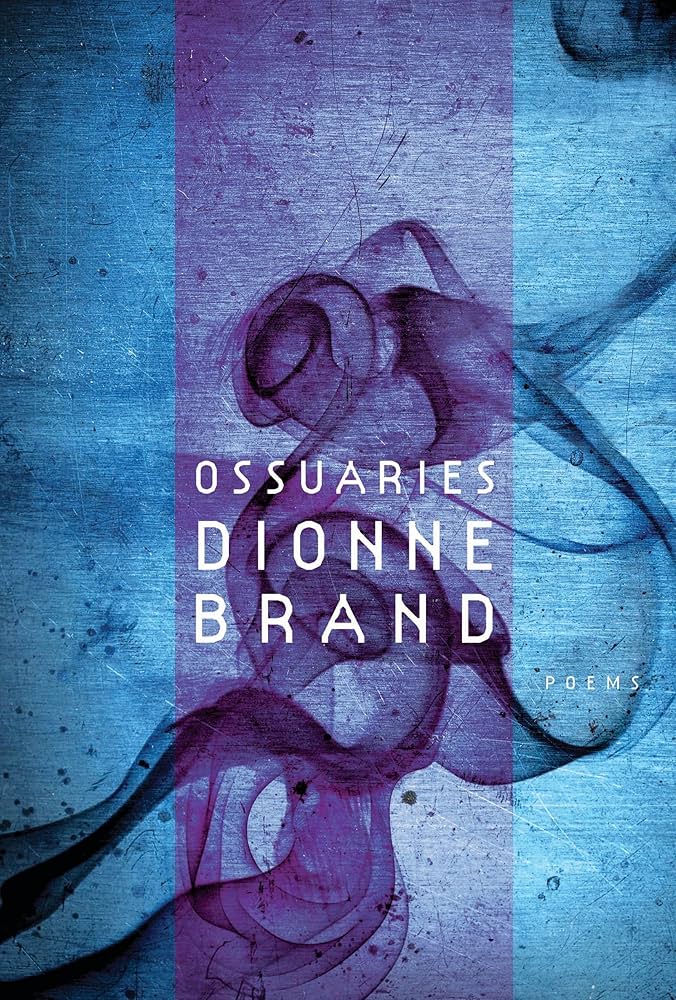
1. In "Ossuary XI," the world is described as a giant ossuary (82). What types of ossuaries, containments, and cataloguing (see "Ossuary XIII") are at work in the poem?

2. The chapter draws parallels between jazz improvisation and the way Brand’s texts challenge fixed notions of self and citizenship. How does the concept of improvisation function as both a literary and political strategy in Ossuaries and The Blue Clerk?

3. The text describes jazz as a form of resistance that both reflects and challenges dominant narratives of history and identity. How does Dionne Brand use jazz poetics to disrupt conventional storytelling, and what effect does this have on the reader’s understanding of historical memory?

4. The chapter begins with an epigraph from A Map to the Door of No Return, stating that “only the skill of listening may be necessary.” How does Brand’s work position listening as an active, rather than passive, process, and what does this suggest about the relationship between sound, poetry, and freedom?

5. What does Yasmine mean when she says, “I’m not unique” ("Ossuary XV," 123)? Despite her ordinariness—and ours as well—how might social change be possible within the confines of the text?

6. Coltrane’s Interstellar Space is invoked as an influence on Brand’s work, particularly in the way it explores new musical and conceptual territories. How does the metaphor of space—both in music and in poetry—function in Ossuaries and The Blue Clerk?
 SOUNDIN' CANAAN REMIXED